Server-Based Computing is changing the way U.S. businesses handle their data and applications and IT infrastructure management in 2026. Organizations gain better operational control and system expansion capabilities through server-based computing, which delivers more powerful processing resources than single-user devices. The centralized computing system decreases expenses while enhancing data security and access for both remote work and corporate applications. Server-based computing remains essential in contemporary IT frameworks as organizations transition towards hybrid work and digital-first business models. This guide explains the server-based computing model operation and its main advantages and real-world applications.
What is Server-Based Computing?
Server-based computing exists as a computing model which delivers applications and data together with processing power from centralized servers instead of individual user devices. The system enables users to access resources through network connections which create a powerful business solution that works effectively for organizations.
Server-based computing enables a central system to control all operations which contrasts with traditional computing systems that require each computer to manage its own tasks. The solution provides multiple benefits which include enhanced security and decreased hardware expenses and simpler IT operations.
How Server-Based Computing Works
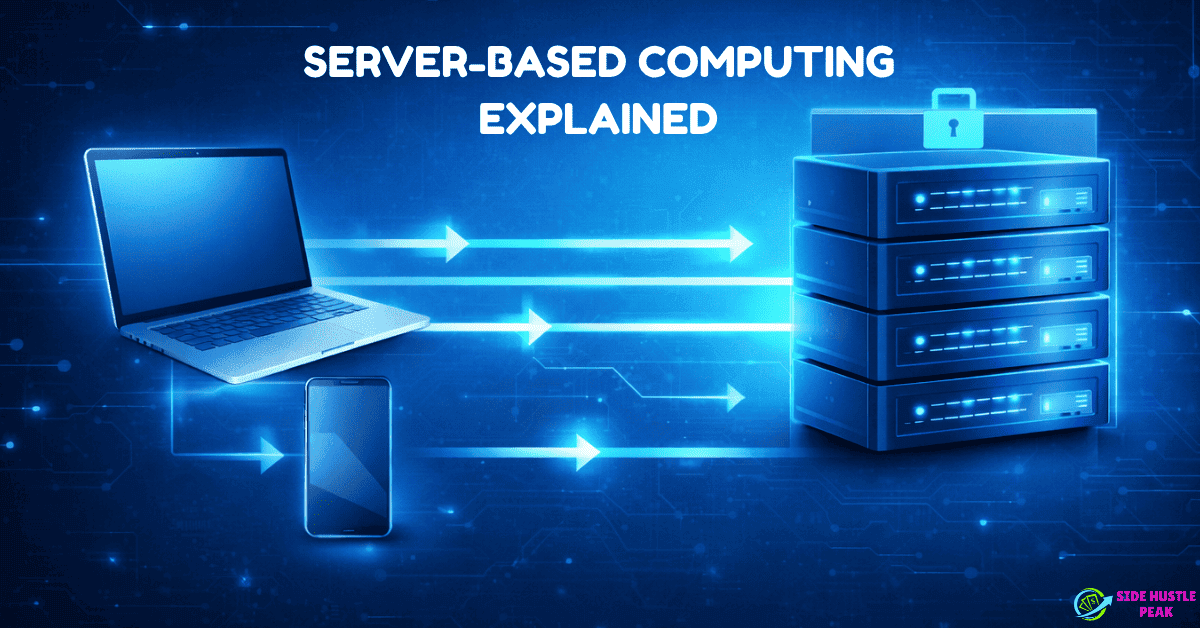
Centralized processing and application operations and data management are conducted through a single powerful server in Server-Based Computing. In a typical setup, users connect to the server through client devices such as desktops, laptops, or thin clients using a secure network connection. The system operates from the central server which runs programs after users open an application, with the device showing the interface and transmitting user input.
The system enables organizations to control their data and security measures and operational performance from one central location. The server handles all main tasks which enables IT teams to complete updates and maintenance and backups with increased speed and efficiency. Remote work situations require this model because it gives U.S. companies and international businesses secure access to their systems from any location.
The main benefit of Server-Based Computing enables users to experience high computing power through their basic equipment. Users can operate demanding software programs without purchasing high-priced devices because the server manages extensive computational tasks. The solution provides companies with a cost-effective and scalable approach to resource optimization which enables them to sustain high operational efficiency and security standards.
Architecture of Server-Based Computing
The server-based computing system uses its central design to process all computing tasks while controlling access to software and data through its main server system. The system enables U.S. organizations to achieve better operational results through improved efficiency and data protection measures while enabling them to conduct extensive remote work activities. The system’s essential elements create a dependable system which operates at optimal performance in contemporary IT environments.
Centralized Servers
Centralized servers serve as the fundamental processing units which execute all computation tasks while storing data and running application software in server-based computing systems. Businesses utilize high-capacity servers to operate software applications and control their workload instead of depending on individual computers. The system decreases its need for user devices by providing constant performance throughout all operational areas of the organization. Centralized servers became the preferred choice for many U.S. businesses because they provide better control over operations while enabling quicker system updates and easier system maintenance.
Network Infrastructure
For server-based computing to operate properly, organizations need to establish robust network systems which maintain consistent performance levels. All users need to access the central server through the network which requires both high-speed internet and low-latency connections to function properly. Enterprise networks protect their operations through firewall systems which create secure networks while managing bandwidth to deliver constant connectivity. U.S.-based businesses who invest in dependable networking equipment, experience productivity improvements and better user satisfaction.
Client Devices
The client devices which people use to access information work as entry points for the server-based computing system. The central server can be accessed through various devices, including desktops, laptops, tablets, and thin clients. The devices need less processing capacity than traditional systems because servers execute all demanding activities. The organizations experience financial savings through server-based computing which enables them to handle multiple employees who work from various locations in different time zones.
Virtualization Layer
Virtualization Layer The virtualization layer serves as a contemporary improvement which boosts server-based computing efficiency. The technology enables multiple virtual systems and operating systems to operate simultaneously on a single physical server. The system delivers enhanced resource management which results in reduced operational expenses and better performance capabilities. Virtualization technology exists throughout the United States to facilitate expandable IT systems and cloud services and to handle advanced workload processing without requiring extra equipment.
Key Benefits of Server-Based Computing
Cost Efficiency
Server-based computing enables organizations to manage their expenses through its primary benefit. Businesses can use a central server to perform processing tasks instead of requiring them to buy high-end computers for each employee. The solution results in decreased hardware expenses, reduced maintenance costs, and increased duration of device usage. The model allows U.S. companies to improve their IT expenditure management while maintaining operational performance.
Centralized Management
IT teams can handle all system applications and updates through server-based computing from one centralized location. The organization benefits from this centralized system because it allows for device management without needing to set up each individual device. Organizations that seek to simplify their IT operations gain efficiency through this network solution which enables them to distribute system updates and security patches and software installations throughout their entire organization.
Data Security
Modern businesses prioritize data security as their most important challenge, and server-based computing offers them exceptional benefits for protecting their data. All sensitive information needs to be stored on a central server so that companies can easily monitor and protect their data while backing it up. The system prevents data breaches and device thefts and accidental data loss, which establishes it as a dependable security solution used by U.S. finance and healthcare and SaaS industries.
Remote Accessibility
The present time needs workers to perform their tasks from remote locations because this form of work has become a fundamental requirement. Server-based computing enables users to reach their applications and data which they need from any location that provides internet access. Employees can securely log in from home, while traveling, or from different office locations without compromising performance. The system provides suitable work conditions for teams that operate from different locations and businesses which use hybrid work arrangements.
Scalability
The IT requirements of businesses increase as their size expands. The process of scaling operations becomes more straightforward and affordable through server-based computing. Organizations can expand their server capabilities by upgrading existing systems or deploying additional resources instead of acquiring new equipment. Businesses can expand their operations and handle increased user demand through this system which requires no major infrastructure modifications and operates as an effective long-term solution for digital business environments.
Disadvantages of Server-Based Computing
Server-based computing provides businesses with effective operational management and performance advantages. However, this technology presents several constraints which USA businesses must assess before they decide to use it. Organizations that understand these drawbacks will not face performance or cost-related issues because they will make better infrastructure decisions.
Server Dependency
All users who depend on server-based computing systems lose access to their services because those systems require constant operation from their main server. All connected users lose access when the main server goes down because of hardware problems or maintenance work or cyberattacks. The situation creates severe operational problems for organizations that need continuous access to their data and software. The majority of U.S.-based organizations implement backup servers and failover systems to protect their systems, but this strategy results in higher infrastructure expenses and operational difficulties.
Network Reliance
Server-based computing depends completely on an unbroken connection that delivers high-speed network access. Users experience system disruption when the internet connection or internal network speed decreases because critical systems become inaccessible. The performance of remote work environments shows this problem because it relies on the quality of available external internet connections. Advanced networking solutions create higher operational costs for U.S. businesses because they need to maintain uniform network performance across multiple sites.
Initial Setup Cost
The initial setup cost of server-based computing systems reaches high levels although these systems enable organizations to save money during extended periods. Businesses need to invest in powerful servers, secure infrastructure, networking equipment, and IT expertise to build a reliable system. Startups and small businesses face challenges with this upfront cost because they need to operate their businesses which makes them choose cloud-based solutions as a more flexible option. The system provides strong financial returns after its establishment through centralized management and decreased costs at the device level.
Server-Based Computing vs Cloud vs Edge Computing
Businesses need to understand server-based computing, cloud computing, and edge computing differences because they help businesses select appropriate IT infrastructure. The three computing models provide users with computing resources yet their operational methods for data handling and storage and access methods to data differ from each other.
Key Differences Explained
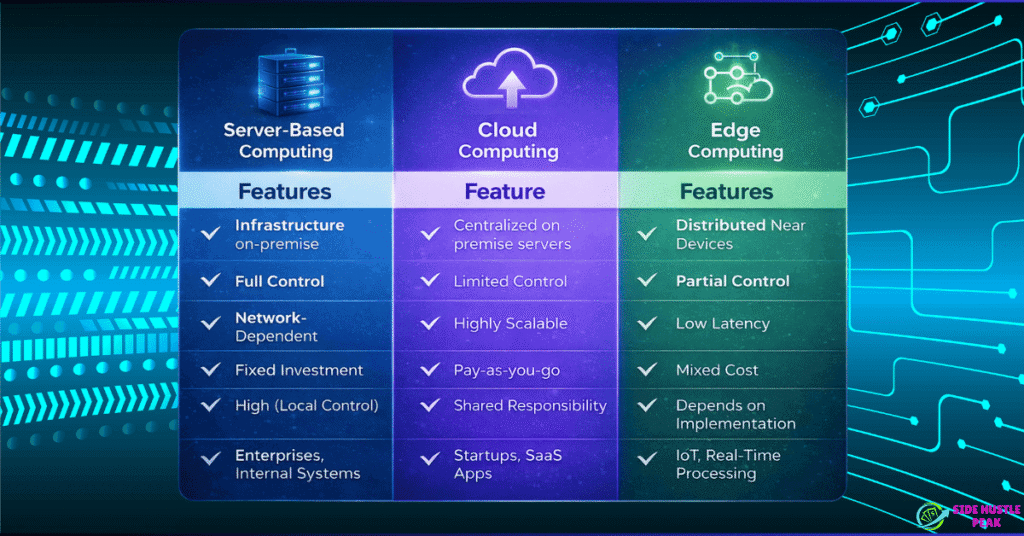
Cloud computing platforms such as Amazon Web Services provide scalable alternatives to server-based computing.
When to Choose Each Model
Server-Based Computing:
The system provides complete system control to organizations through its system, which makes it suitable for banks and healthcare institutions and large enterprises that work with sensitive information.
Cloud Computing:
The solution enables startups and businesses to achieve scalability and flexibility through its low initial costs, which require no physical server management.
Edge Computing:
The technology serves real-time functions through IoT devices and smart city systems and autonomous systems, which need fast response times.
Which One is Better in 2026?
The solution to this problem cannot be solved through a single approach. In 2026, many U.S.-based companies are adopting a hybrid approach which combines server-based computing with cloud and edge technologies to achieve their performance and cost and security requirements.
For Example, Businesses use centralized servers to protect their sensitive data while utilizing cloud platforms for scalability and edge computing to handle immediate processing needs.
Real-World Examples of Server-Based Computing
Server-Based Computing functions as a fundamental component that supports present-day IT systems across American businesses that require secure scalable solutions with centralized management capabilities. Organizations use centralized servers to provide application access and data storage while maintaining operational control because these servers deliver superior performance compared to individual devices. The following list presents the most significant examples that demonstrate real-world effects:
Corporate IT Environments
Server-Based Computing enables large enterprises to operate their employee systems and internal software while safeguarding their confidential corporate information from a centralized server location. The system enables IT teams to distribute system updates and track system usage and implement security measures across all devices without requiring them to be present which supports the hybrid and remote work model that U.S. companies use.
Banking and Financial Systems
Server-Based Computing serves as the primary technology base that enables banks and financial institutions to perform transaction processing and customer account management while protecting their financial information. The system achieves high reliability and security through centralized servers which deliver real-time processing and fraud detection and ensure compliance with stringent U.S. regulations.
Remote Desktop Services
Companies use server-based systems to establish remote desktop access for their staff members because remote work has become more common during this time. Employees can work from any location because their entire system operates through a central server which delivers better security and performance capabilities.
Enterprise Software Systems
Enterprise tools like ERP and CRM platforms run efficiently on centralized servers which enable multiple departments to access the same system at the same time. This setup allows different departments to use the system simultaneously which results in consistent data sharing between departments and quick decision processes and efficient business operations.
SaaS Platforms Backend
Many SaaS platforms operate on a server-based architecture behind the scenes which creates their functioning method. The backend system depends on centralized servers to manage data processing and user management and application performance at scale although users access these tools through the cloud.
Server-Based Computing maintains critical systems in use through multiple industries because it delivers high performance together with strong security and centralized control which helps businesses maintain their competitive advantage in the digital market.
Final Example:
Many organizations use server-based computing in corporate IT systems, banking, and enterprise environments to ensure security and centralized control.
Many businesses rely on enterprise computing systems like those explained by IBM to manage centralized infrastructure.
Use Cases of Server-Based Computing
The current digital world uses server-based computing systems which deliver centralized processing power to protect data and enable users to access applications from any location. The USA will experience increased organizational adoption of this model during 2026 to enable remote work capabilities while decreasing IT expenses and establishing better system management for remote teams.
Remote Work Environments
Server-based computing systems deliver essential secure access to enterprise systems in both remote and hybrid work environments. Employees can connect to centralized servers from laptops, desktops, or thin clients, regardless of their location.
This system enables organizations to achieve three main objectives which include:
- Protecting all confidential business documents from unauthorized access
- Enabling staff members to use software programs whenever they need
- Minimizing requirements for powerful computer systems at workstations
The distributed workforce model helps US companies boost productivity while reducing cybersecurity threats which include data breaches and unauthorized access to devices.
Educational Institutions
Educational institutions use server-based computing systems to efficiently control their computer laboratories and digital educational spaces. Institutions run their applications from dedicated servers which eliminates the need to install software on each separate device.
This approach helps educational organizations:
- Deliver standardized software across all student devices
- Reduce maintenance costs for IT departments
- Enable secure access to learning platforms from anywhere on campus or remotely
The United States educational system sees multiple colleges and universities adopting this framework to implement hybrid educational programs together with digital classrooms which need both flexible learning space and centralized system management.
Healthcare Systems
Healthcare organizations depend on server-based computing systems to protect their patient information while running essential medical software applications. Centralized servers ensure that electronic health records (EHRs), diagnostic tools, and hospital management systems are securely stored and controlled.
Healthcare facilities benefit from the following main advantages:
- Strong data protection and compliance with regulations (such as HIPAA in the US)
- Fast and controlled access to patient records for authorized staff
- Reduced risk of data loss due to device failure
The centralized system improves departmental coordination while it boosts medical operation reliability.
Enterprise Businesses
Large enterprise organizations use server-based computing to streamline business operations across multiple departments and locations. All critical applications and data of the organization are managed through centralized servers instead of relying on individual systems.
Enterprises gain the following benefits from this system:
- IT management and system updates become easier to handle
- Business growth allows organizations to expand their infrastructure
- All global teams maintain the same level of performance throughout their work
Future of Server-Based Computing
Business organizations now prefer flexible architectural solutions that enable them to manage their IT resources through centralized systems while utilizing cloud-based services.
Organizations nowadays utilize hybrid integration solutions which connect their internal operations through server-based computing to secure data while using cloud services for their worldwide operational needs. The hybrid solution enables organizations to operate without infrastructure constraints while achieving better protection of their systems.
AI-powered server optimization stands as another major development. The current server systems use machine learning technologies to handle resource distribution and hardware failure forecasting and load management and system optimization without needing human operators. The system minimizes operational expenses while maintaining business activities through its downtime capabilities.
Remote work operations have expanded together with the development of distributed computing resources. Organizations implement server-based solutions to enable their remote staff members to access protected central application and data resources. The system maintains its operational capacity for every user regardless of the device they use or their geographic position.
Security has emerged as an essential focus point. Organizations will implement zero-trust security systems and advanced encryption methods and real-time threat detection systems to enhance their cybersecurity systems through direct integration with their server-based computing environments. The protection of sensitive data in finance healthcare and government systems exists as a critical requirement for these industries.
Businesses in the United States and worldwide use server-based computing together with cloud technologies to create IT systems which provide them with flexible and scalable solutions that will last into the future. The current business environment demands organizations to adopt modern computing methods which combine performance and security with scalable solutions.
You may also find this helpful: [What Is Ambient Temperature? Definition, Best Examples, and Why It Matters in Daily Life (2026 Guide)].
FAQs About Server-Based Computing
The most frequently asked questions about server-based computing receive their answers through accessible explanations which help both beginners and professionals to grasp the concept with ease.
What is server-based computing in simple words?
Server-based computing represents a computing model which uses a central server to host all applications and data and processing tasks instead of letting users run them on their personal devices. Users can access all system resources through network connections which enables easier system management and provides better security and cost savings.
Is server-based computing the same as cloud computing?
The two concepts show a relationship but they remain distinct from each other. Server-based computing depends on a centralized server system which organizations typically maintain at their own facilities. In contrast, cloud computing uses distributed servers which internet providers such as Amazon Web Services and Microsoft Azure host throughout the web.
The following explanation provides an essential understanding of the two concepts:
- Server-based computing = Private, centralized infrastructure
- Cloud computing = Scalable, internet-based infrastructure
What are the primary advantages of server-based computing?
Server-based computing provides essential benefits to contemporary businesses which function in both enterprise and hybrid work settings. The system provides organizations with multiple advantages which include:
- Data protection improves when sensitive information stays protected through central server storage which prevents access to multiple endpoints for storage.
- IT teams obtain centralized control through their ability to handle user management system updates and application management from a single control center.
- The system decreases expenses because it eliminates the need for advanced hardware across all devices.
- The system enables users to obtain secure system access from any location that provides network connectivity.
- All maintenance tasks become easier because the server handles all updates and patches instead of needing these processes to occur on each individual device.
The advantages of server-based computing make it essential for companies that operate through remote work and hybrid work environments.