What is electronic software distribution and why does it have increased importance for 2026? Electronic software distribution ESD enables users to receive software through internet delivery without needing physical media or waiting outside for distribution. You have used ESD through your experience with downloading apps from the Apple App Store and activating Windows licenses and subscribing to Adobe Creative Cloud. Currently more than 95 percent of PC software sales in the United States occur through digital channels and this trend continues to grow. The American public needs to understand ESD because it functions as essential information in a world dominated by software systems.
What is electronic software distribution (ESD)?
Electronic software distribution (ESD) provides a digital method for delivering software products to end users through the internet which eliminates the need for physical media distribution that includes CDs and DVDs and USB drives. Users can download and activate and manage their software through online platforms which provide real-time access to their software programs.
People used to drive to stores and purchase disc-based software packages before ESD became a common practice. You had to wait for a replacement if something went wrong. ESD changed all of that. You get instant access to your software after making a purchase because it becomes available for download and installation without any waiting time or environmental impact.
The term is also commonly referred to as electronic software delivery, digital distribution, or online software delivery. The three terms describe the same process which enables you to obtain software from a publisher through internet delivery instead of receiving a physical package.
How does electronic software distribution work?
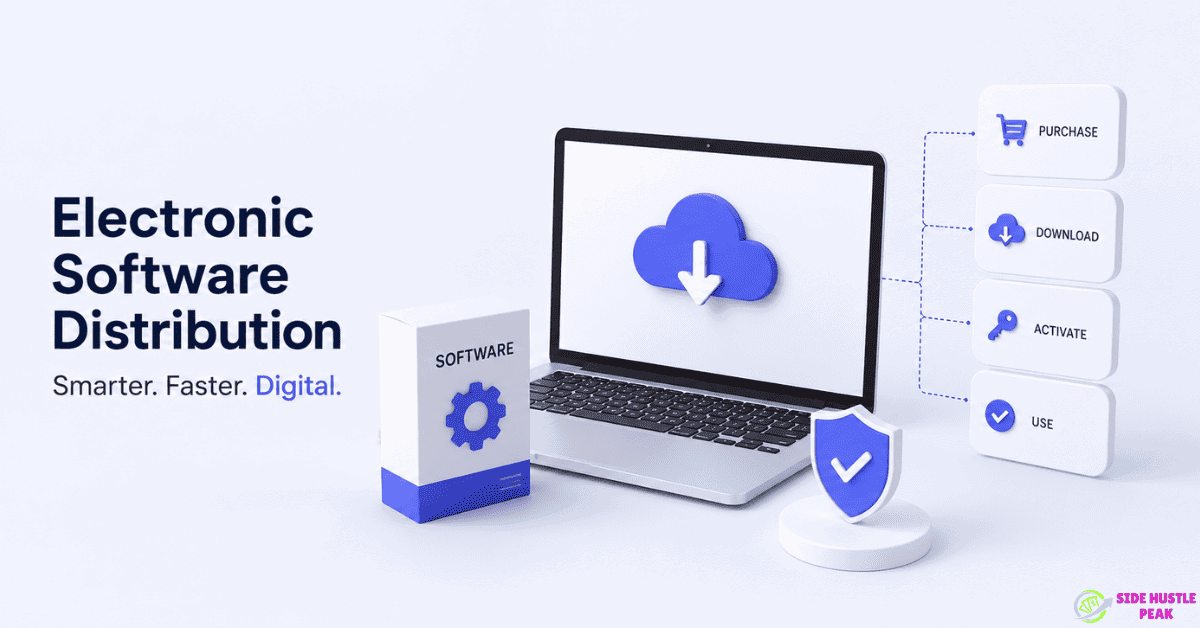
Most people perceive the process to be more complicated than its actual execution. The United States digital software purchase process contains hidden steps that operate as follows:
- Commercial transaction: You purchase software licensing rights through platforms such as Steam and the Microsoft Store and vendor websites.
- License creation: The system produces a distinct license key which associates with your purchase to create an account-based activation system.
- Download: The software file reaches your device through a secure internet connection that uses encrypted delivery methods.
- Installation: You install the software locally on your device or access it via the cloud.
- Activation: The software verifies your license online to confirm its authenticity and correct registration status.
- Updates: The system automatically delivers all future security patches and new features and all existing patches without requiring any manual reinstall process.
The entire process takes minutes to complete from the time of purchase until the first time the product is used because physical shipping requires days or weeks to deliver the item.
Types of electronic software distribution
1. App stores
The most common way that Americans experience ESD. Users can access a unified software marketplace through Apple’s App Store and Google Play which allows them to search for software products and purchase and install these products on all their devices. Users can access downloaded apps from their devices at any time after developers submit their apps to the platform.
2. Direct web downloads
B2B software companies and enterprise software companies permit their customers to download software from their official website after they make a purchase. The tools QuickBooks and Zoom and Slack operate in this manner. The developer keeps total authority to determine all branding elements and pricing options and user interface design.
3. SaaS (Software as a Service)
SaaS represents the cloud-based development of electronic software distribution through ESD. Users can reach software services by using a web browser without needing to download any files. Google Workspace and Salesforce and HubSpot produce their products through this approach. Users can start working by signing into the system which requires no software installation or version updates. SaaS has become the primary software delivery model that companies in the United States use to deliver their business software.
4. Gaming platforms
Steam and Xbox Game Pass and PlayStation Store and Epic Games Store function as digital distribution systems that distribute electronic games through their dedicated game distribution networks. Players can buy digital games which they can download and control their entire gaming collection through the platform while receiving automatic game updates and storing their progress in the cloud.
5. Enterprise ESD systems
Large organizations use centralized ESD tools — like Microsoft Endpoint Configuration Manager or Jamf — to deploy and manage software across thousands of employee devices simultaneously. IT teams can manage software installation processes while monitoring system usage and enforcing licensing rules from a single control center.
Electronic software distribution vs. physical software distribution
| Feature | Electronic (ESD) | Physical distribution |
| Delivery speed | Instant | Days to weeks |
| Cost to distribute | Very low | High (packaging, shipping) |
| Updates & patches | Automatic | Manual or repurchase |
| Geographic reach | Global, instant | Limited by logistics |
| Environmental impact | Minimal | Plastic, packaging waste |
| License management | Centralized online | Manual tracking |
| Internet required | Yes (for download) | No |
Key benefits of electronic software distribution for U.S. businesses
95% Digital Adoption:
Around 95% of U.S. PC software sales are now completed through digital distribution platforms.
Massive Market Growth:
The global Electronic Software Distribution ESD market is projected to exceed 700 billion dollars by the year 2030.
Zero Shipping Costs:
Digital software delivery eliminates all packaging and warehousing and shipping costs.
Instant Access & Activation:
The client does not have to endure the long wait commonly associated with physical distribution.
Lower costs
ESD eliminates the expenses associated with producing physical media and creating printed materials and storing products and handling shipping operations. The software companies achieve direct profit increases through these cost reductions which enable them to offer customers better prices.
Instant global reach
A software developer in Austin, Texas can sell their product to a customer in New York, London, or Tokyo in the exact same moment — without a single warehouse or shipping partner involved. ESD removes geography as a barrier to growth.
Automatic updates and better security
When a vulnerability is discovered, ESD platforms can push a security patch to every user within hours. With physical distribution, patching would require shipping update discs or waiting for users to manually download fixes. In today’s threat landscape, that delay is unacceptable.
Simplified license management
Through ESD businesses gain the capacity to monitor all licenses and handle renewal processes while conducting usage audits from one centralized online platform. The system provides U.S. enterprises with essential capabilities to handle software distribution in their remote and hybrid work environments.
Eco-friendly
No plastic discs, no cardboard boxes, no bubble wrap. Electronic software distribution has a significantly smaller environmental footprint than physical distribution — a growing priority for American companies with sustainability goals.
Challenges of electronic software distribution
ESD has multiple disadvantages for its users. Businesses can make better decisions through the complete understanding of these two factors, which study;
Internet dependency: Internet dependency requires users to have a dependable high-speed connection for software downloads which creates difficulties in rural areas and places with restricted broadband availability.
Software piracy with license abuse: Digital licenses allow easier sharing and cracking than physical copies. The BSA estimates global losses from unlicensed software exceed $46 billion annually. Companies need to implement strong Digital Rights Management systems together with online activation systems.
Download size: Modern software especially games needs more than 100GB of storage space for each title. Users with slower connections face difficulties because of large file sizes.
Platform dependency: Platform dependency results in users losing access to their legally purchased software when storefronts shut down or remove products. This issue continues to affect customers after multiple gaming platforms experienced this problem.
Real-world examples of electronic software distribution
Everyday software usage by most Americans depends on ESD which functions as their primary way to access software.
Steam: Steam operates as the largest digital distribution platform for PC games which provides access to over 50000 digital games for its 132 million active users.
Adobe Creative Cloud: The U.S. creative community uses a monthly subscription to access Adobe Creative Cloud because they want to use Photoshop with its automatic updates to the latest version.
Microsoft 365: Microsoft now distributes its products through ESD which offers office software as a subscription service instead of its previous boxed Office package.
Apple App Store: delivers all iPhone applications through its ESD system which securely reviews and signs apps before sending them to your device.
Zoom & Slack: Enterprise communication tools operate entirely through digital distribution while their system updates occur silently in the background.
The future of electronic software distribution
The ESD model is not standing still. Several major trends are shaping where it goes next — and U.S. businesses need to pay attention:
AI-powered delivery systems
Distribution platforms use artificial intelligence to create personalized recommendations and to forecast bandwidth requirements and to enhance download speeds based on a user’s device and location and connection type. The system improves download efficiency by providing smarter download capabilities.
Subscription-first models
Perpetual licenses — where you buy software once and own it forever — are rapidly being replaced by subscription models. Adobe, Microsoft, and Autodesk have all made the shift. For consumers, this means lower upfront costs but ongoing payments. For companies, it means predictable recurring revenue.
Cloud-native software
Increasingly, “downloading” software at all is becoming optional. Cloud-native apps run entirely in the browser, meaning no installation is required at all. This is the logical endpoint of ESD — and it’s already here for most productivity tools used across American offices.
Blockchain for license verification
Some companies are exploring blockchain-based licensing to create tamper-proof records of ownership that can’t be counterfeited or duplicated. While still emerging, this technology could significantly reduce piracy and simplify resale of digital licenses.
You may also find this helpful: [Server-Based Computing: Complete Guide (How It Works, Benefits & Examples in 2026)].
FAQ’s About ESD
What does ESD stand for in software?
ESD stands for Electronic Software Distribution which some people refer to as Electronic Software Delivery. The two terms describe the same concept which delivers software to users through internet downloads without requiring physical discs or retail store visits.
Is electronic software distribution safe?
You need to trust your download source before you can download from any website. Your security remains intact when you use official vendor websites and the Apple App Store and Google Play and Steam platforms. People encounter problems when they download software from unknown third-party websites. Your gut instinct should lead you to reject any deal which appears too advantageous and any website which seems untrustworthy.
What is the difference between ESD and physical software distribution?
Think of it this way — physical distribution puts your software on a disc or USB drive and ships it to your door. ESD delivers the same software to your device within minutes without requiring any waiting time or packaging process or risk of disc damage during transportation. The current software distribution system operates through ESD which delivers software to users as the standard method of operation.
Which companies use electronic software distribution?
Pretty much every software company you can name — Microsoft, Adobe, Apple, Google, Valve, Zoom, Salesforce — the list goes on. At this point, ESD isn’t a feature or a perk. It’s just the standard way software gets to users, full stop.
Is SaaS the same as electronic software distribution?
The solution remains almost complete but not fully complete. SaaS operates as an advanced service that exceeds conventional ESD. Users must download and install software on their devices when using standard ESD. SaaS applications such as Google Docs and Salesforce require no installation process for users. Druggies need to open their cybersurfer and complete the login process to pierce the system. The same conception of digital metamorphosis exists but it has been advanced to a advanced position.
Final thoughts
Electronic software distribution has fundamentally changed how Americans — and the world — access, use, and manage software. What started as a convenient alternative to physical stores has become the backbone of the entire software industry. Whether you’re a business evaluating enterprise tools, a developer building your first app, or simply a user wondering why you haven’t bought a software disc in years, ESD is the reason. It’s faster, cheaper, more secure, and more scalable than anything physical distribution could offer — and it’s only getting smarter in 2026 and beyond.